
Shopping cart,
0 products
There are no products in your shopping cart.
Nội dung bài viết
In the northernmost reaches of Vietnam, where clouds embrace the mountains and history lingers in every stone, there lies a quiet stream with a mighty name — Lenin Stream.
It is not merely a scenic spot, but a living monument to Vietnam’s revolutionary soul, the place where President Ho Chi Minh once lived and worked in 1941, sowing the first seeds of the nation’s independence movement.
Here, time seems to slow. The air feels purer, as if infused with invisible reverence. Standing beside its emerald waters, one can almost hear the heartbeat of the past — the whispers of ideals, the rhythm of destiny echoing through the forest.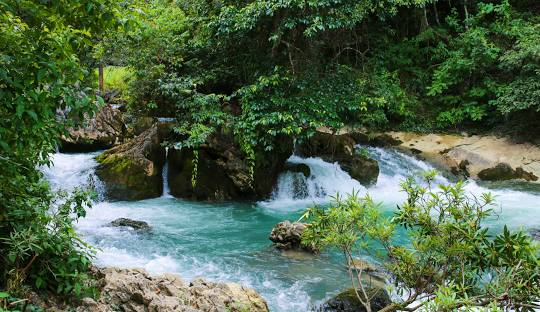
The name “Lenin” evokes a world figure, yet for President Ho Chi Minh, it represented more than that — it symbolized faith, conviction, and unwavering belief in justice and equality.
By naming this modest stream after Lenin, he bridged the ideals of international revolution with the steadfast resilience of Vietnam.
The water of Lenin Stream is clear as crystal, flowing gently and endlessly, reflecting sunlight like threads of silk. Beneath its surface, golden pebbles shimmer, and the shadows of trees ripple softly. It is not a torrent of power, but a quiet, enduring flow — just like the Vietnamese people: gentle, humble, yet unbreakable.
If Vietnam’s history were a grand symphony, Lenin Stream would be its first, tender note — calm, pure, and full of promise.
Lenin Stream Cao Bang About 55 kilometers north of Cao Bang City, Lenin Stream rests within the Pac Bo Historical Site, near the border with China.
The journey there is a pilgrimage through poetry: winding mountain roads like silk ribbons, terraced rice fields glimmering under the sun, and Tay and Nung villages nestled peacefully among green hills.
As you approach, the hum of motorbikes fades birdsong, and the scent of pine fills the air. Then, suddenly, it appears — a ribbon of jade weaving through limestone cliffs, glowing softly under the northern sky.
It was here, in 1941, that Ho Chi Minh returned to his homeland after 30 years abroad. In the small Coc Bo Cave nearby, he lived and worked in secrecy — translating documents, writing letters, and planning the revolution that would free his people.
Imagine it: a simple wooden desk, a dim lamp, a pot of tea — and a man whose dreams carried the fate of a nation.
Outside, the stream flowed beside him, whispering in time with history.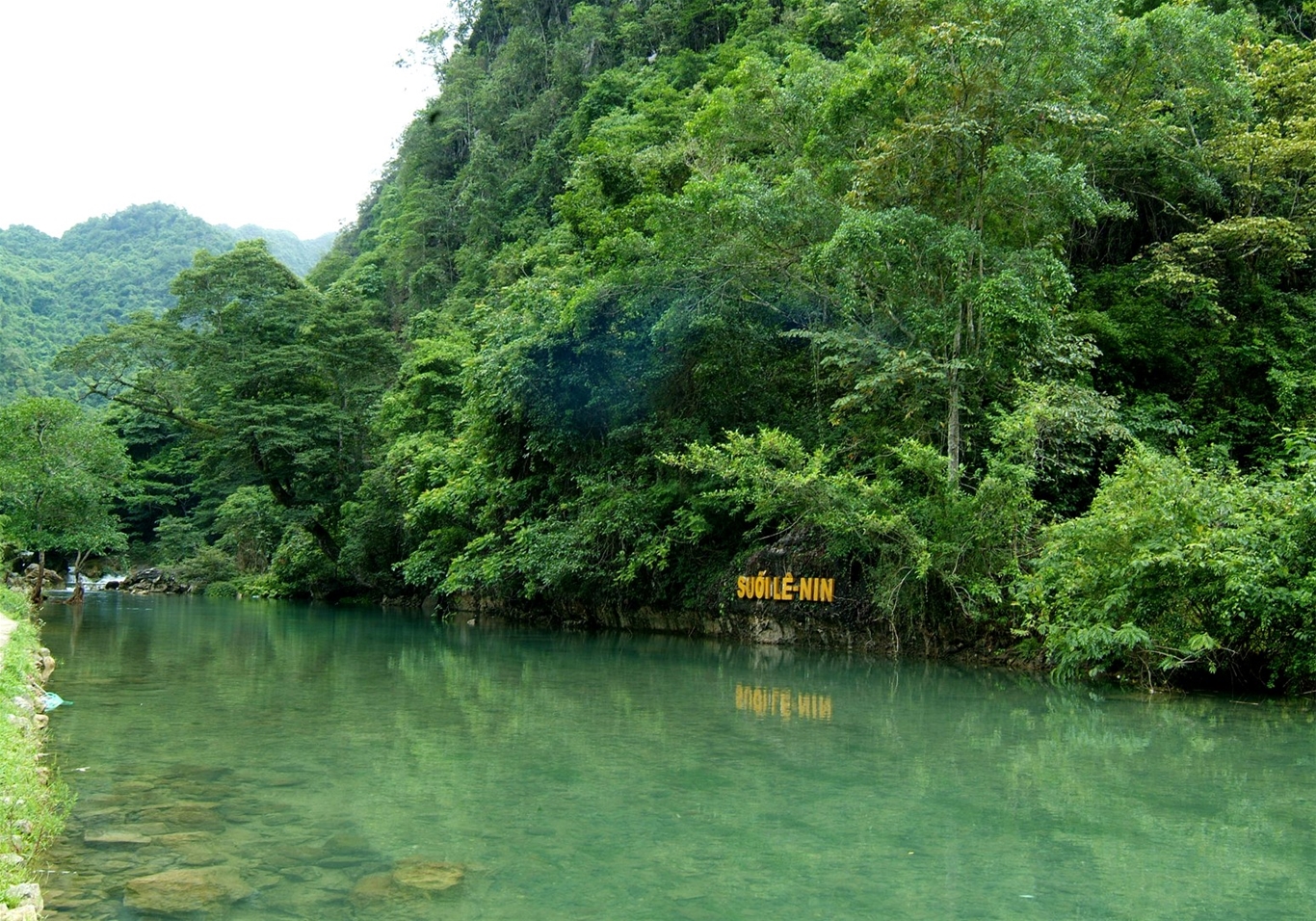
Lenin Stream Cao Bang Standing before Lenin Stream, one feels the profound harmony between nature and human destiny.
On clear mornings, the surface mirrors the sky — blue upon blue, infinite upon infinite. It feels as though heaven and earth are one.
Each morning, Ho Chi Minh would come to the stream to wash his face and reflect. Looking up at the nearby Karl Marx Peak, he would joke: “In the morning, I visit Lenin; in the afternoon, I meet Karl Marx.”
That simple line, both witty and wise, revealed a soul at peace — a man who could balance great ideology with deep humanity.
Here, nature and thought merged one — the flowing water became the current of history itself.
Unlike bustling tourist sites, Lenin Stream radiates quiet simplicity.
The melody of its flowing water blends with rustling bamboo and the hum of crickets beneath the forest canopy. Every leaf, every rock seems alive, part of a symphony written by time and silence.
Nearby, Tay and Nung villagers go about their daily lives — harvesting corn, weaving cloth, tending buffalo — their laughter drifting gently across the valley. Children play along the stream’s edge, their giggles mingling with the sound of water, creating a living song of peace born struggle.
Sitting on a smooth stone, letting the cold water run through your fingers, you feel renewed — as though history itself has washed away the dust of the modern world.
For the Vietnamese people, Lenin Stream is not just a destination; it is a living classroom.
Schools bring students here to see where their nation’s story began — not in grand halls, but in a humble cave beside a mountain stream.
The nearby Pac Bo Museum preserves photographs, manuscripts, and relics Ho Chi Minh’s early revolutionary days. Walking the same path he once walked, touching the same stones, breathing the same mountain air — it all feels deeply human, deeply sacred.
This is where history comes alive — not through words, but through the quiet power of place.
Every ripple of Lenin Stream carries a message. It speaks of patience, resilience, and quiet strength — how even the softest flow can carve through stone, how perseverance outlasts oppression.
Standing here, you begin to see life differently. The stream becomes a teacher, reminding us that true greatness is calm, true power is silent, and true freedom flows gently, like water finding its way through all things.
Perhaps that is why so many visitors leave this place with a feeling of serenity — as if they have touched something eternal.
Each season paints Lenin Stream with its own soul.
In spring, blossoms scatter like silk upon jade water.
In summer, mist rises gently the surface, blurring the line between dream and reality.
In autumn, golden leaves drift upon its calm flow.
And in winter, the air grows crisp and still, cloaking the valley in quiet purity.
Yet through all these changes, the stream’s clarity remains — just as the Vietnamese spirit endures through every storm.
To visit Lenin Stream is to walk through memory.
It is not a trip for sightseeing alone, but a journey of gratitude — a reminder that freedom is precious, peace is fragile, and beauty often lives in the simplest corners of the world.
The entrance fee is small, the walk quiet, the forest peaceful — yet what awaits is immeasurable.
Here, you don’t just see a landscape; you feel it, breathe it, become part of it.
Many visitors dip their hands the cold water, others sit in silence, staring its depths. Each finds their own reflection — of history, of home, of hope.
Time passes. Generations rise and fall. Cities grow.
But Lenin Stream still flows — gentle, constant, eternal.
It carries with it the reflection of the past and the promise of tomorrow.
It mirrors the Vietnamese soul — resilient, compassionate, and endlessly free.
As you leave, the sound of water lingers in your mind, soft as a lullaby — the timeless song of freedom, whispered by a stream that never stops flowing.
There is 0 comment, review about Lenin Stream Cao Bang Vietnam’s Hidden Revolutionary Gem
TVQuản trị viênQuản trị viên
Xin chào quý khách. Quý khách hãy để lại bình luận, chúng tôi sẽ phản hồi sớm