
Shopping cart,
0 products
There are no products in your shopping cart.
Du Gia Waterfall is one of the most refreshing places on the Ha Giang Loop. It is not as dramatic as Ma Pi Leng Pass or as famous as the Nho Que River, but that is part of its charm. The beauty here feels simple, natural, and easy to enjoy.
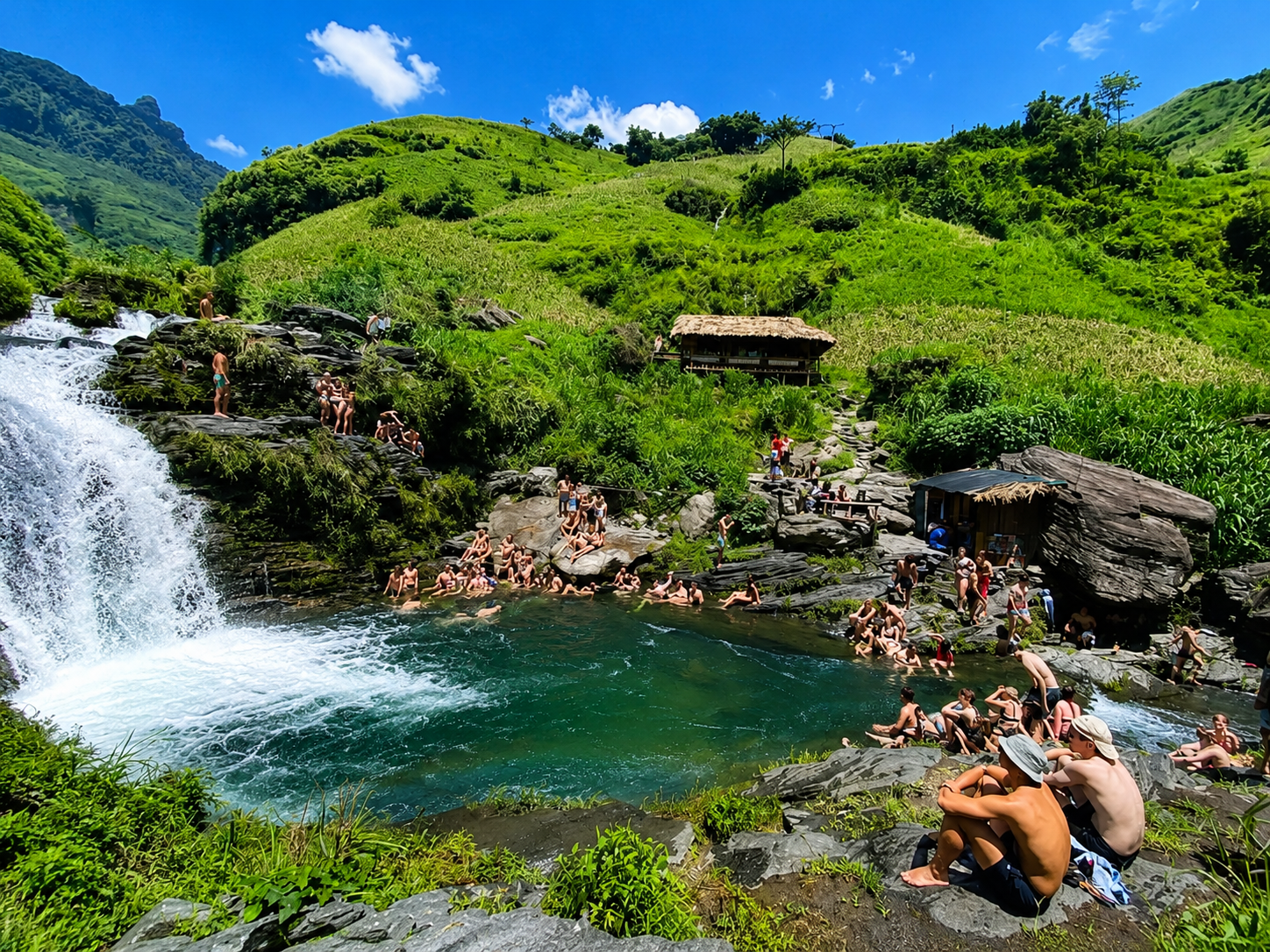
After long hours on mountain roads, the sound of falling water feels like a reward. Travelers often arrive tired the ride, then slowly relax beside the natural pool. Some swim, some sit on the rocks, and others simply enjoy the cool air coming the forest.
This place is especially loved because it gives the journey a different rhythm. Ha Giang is often full of movement: curves, climbs, viewpoints, and changing weather. Here, everything slows down. The road noise disappears. The mountains feel softer. The trip becomes less about reaching the next stop and more about being present.
For many guests, this peaceful corner becomes one of the most unexpected memories of the entire Loop.
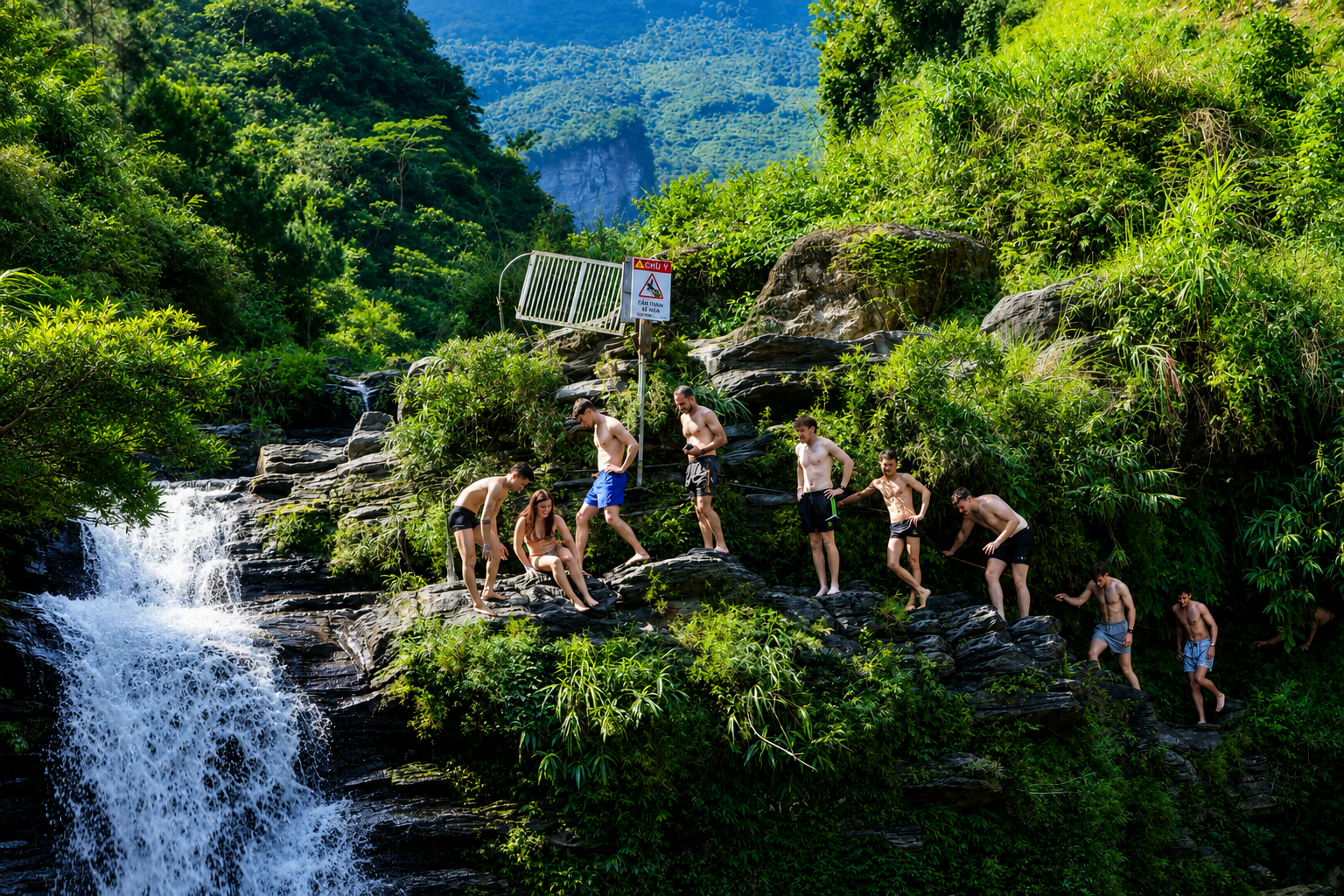
The waterfall is located near Du Gia Village, a quiet area often included in the classic Ha Giang Loop itinerary. Jasmine Tours describes it as one of the final highlights on the 4-day route, around 70 kilometers Ha Giang City and about 20 minutes the village center.
Du Gia itself is known for green valleys, local homestays, rice fields, and a calm rural atmosphere. Compared with busier towns such as Dong Van or Meo Vac, the village feels more relaxed and intimate. It is the kind of place where travelers can experience a slower side of Ha Giang.
Getting there usually involves riding through mountain roads, small villages, and narrow countryside paths. That journey is part of the experience. By the time you arrive, the waterfall feels like a hidden reward tucked inside the landscape.
For guests traveling with Jasmine Tours, this stop is usually included as part of a larger Loop experience. Depending on the itinerary, travelers may arrive after several days of riding through Quan Ba, Yen Minh, Dong Van, Ma Pi Leng, and Meo Vac.
.png)
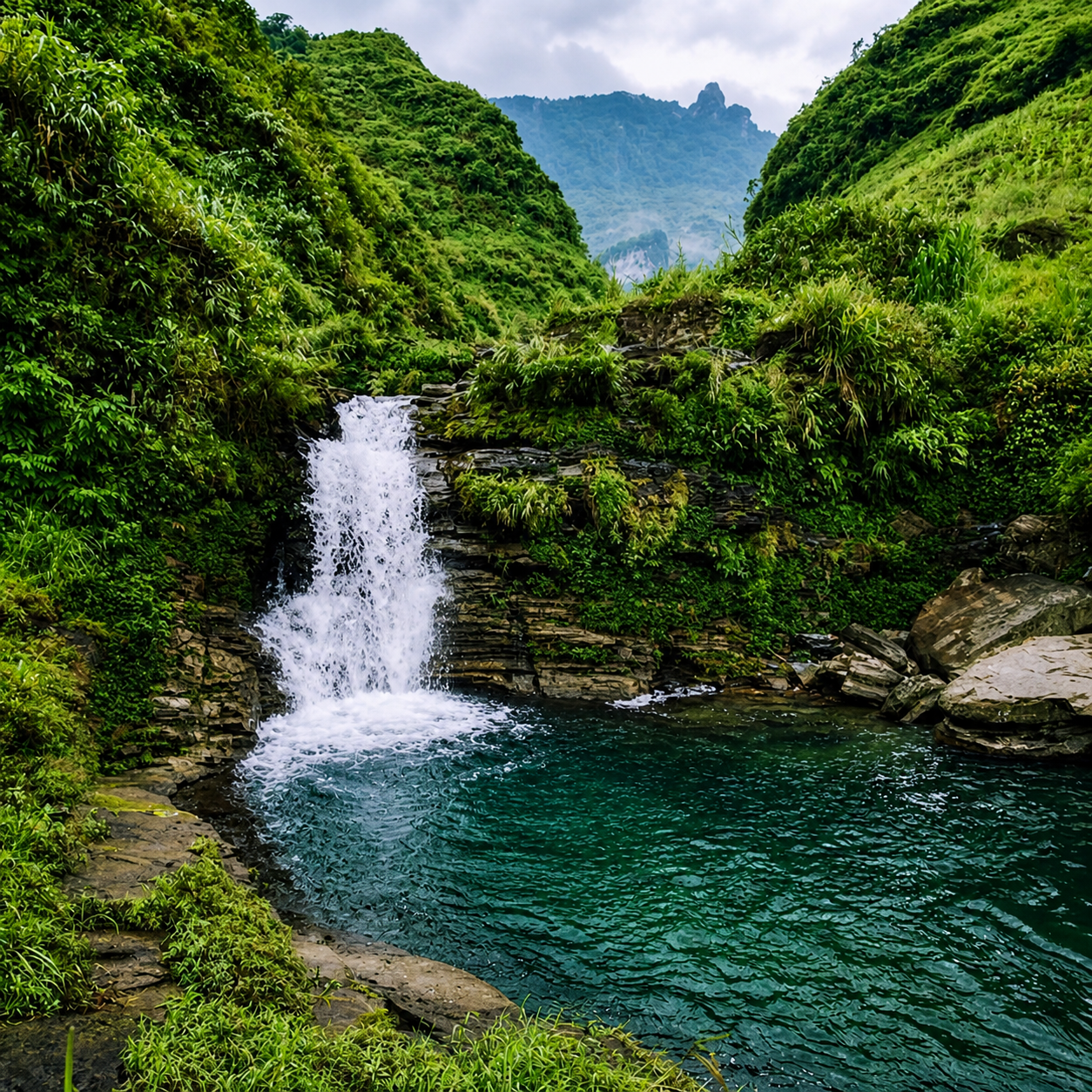
The main reason travelers visit this natural pool is to relax. Swimming is one of the most popular activities, especially during warm months. The water is cool, fresh, and surrounded by green vegetation, making it a welcome break after dusty mountain roads.
Some travelers also enjoy small cliff jumps nearby rocks. However, this should always be done carefully. Water levels can change, rocks can be slippery, and not every spot is safe for jumping. If you are unsure, ask your guide first and never copy risky behavior just for a photo.
Photography is another reason people love this stop. The contrast between dark rocks, white water, green forest, and travelers resting by the pool creates beautiful natural scenes. It is a great place for candid photos rather than staged pictures.
You can also simply sit, listen, and do nothing for a while. That may sound ordinary, but on a multi-day mountain journey, quiet moments often become the ones you remember most clearly.
The best time depends on what kind of experience you want.
March to May, the weather is often pleasant. The air feels fresh, and the journey is usually comfortable for riding. This is a good period for travelers who want mild weather and balanced conditions.
June to August, the landscape becomes greener and more alive. Rain can appear, but the mountains look powerful, and waterfalls often feel stronger. If you visit during this season, bring waterproof clothing and be careful on wet rocks.
September to November, the weather is usually cooler and clearer. This is a beautiful time to enjoy Ha Giang’s rice fields, mountain views, and village life.
December to February, the weather can be cold, especially in the evening. Swimming may not be ideal for everyone, but the village atmosphere can feel peaceful and quiet.
No matter when you visit, mornings are often better if you prefer fewer people. Some travel platforms also recommend going early and being careful around slippery rocks.
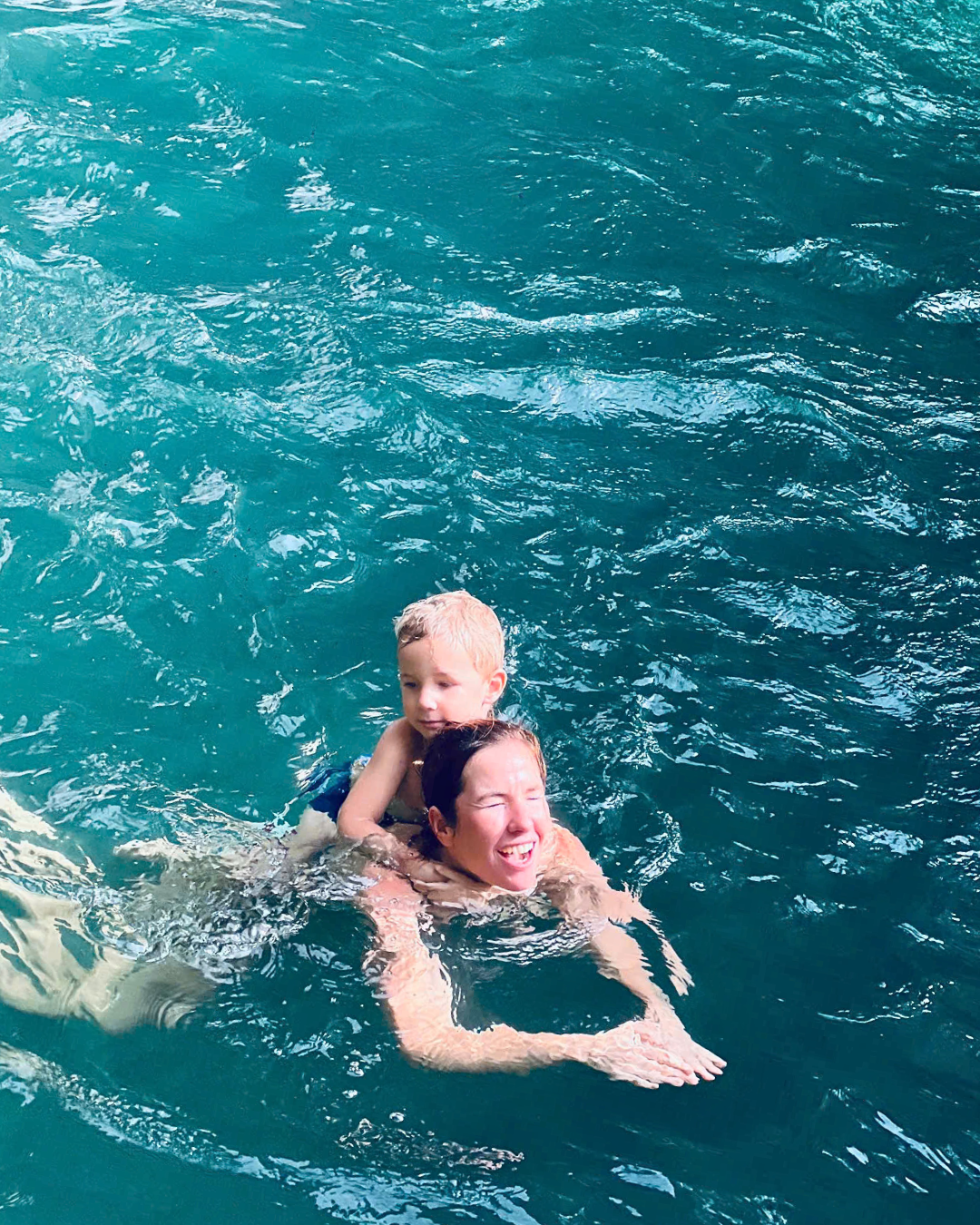
The waterfall is beautiful, but safety should always come first. Natural swimming spots are not controlled like hotel pools. Rocks may be uneven, mossy, or slippery. Water depth may change after rain. Strong currents can also appear during heavy water flow.
Before entering the water, check the area carefully. Walk slowly on rocks. Avoid jumping if you do not know the depth. Do not swim after drinking alcohol. Keep your belongings away wet areas, and listen to your guide’s advice.
If you are traveling by motorbike, safety also matters on the way there. The roads around Du Gia can be narrow and winding. A local Easy Rider can make the experience more comfortable for travelers who do not have riding experience.
At Jasmine Tours, guests can choose different travel styles, including Easy Rider, self-ride for qualified riders, or Jeep. The right choice depends on your confidence, license, and comfort level.
Adventure is better when it feels free, not reckless.

Many travelers come for the waterfall, but they remember the village.
Du Gia is not only a scenic stop. It is home to local families, homestays, small farms, and daily mountain life. Staying here gives travelers a chance to experience Ha Giang beyond viewpoints and photos.
A homestay dinner, a quiet morning in the valley, or a simple conversation with local people can make the journey feel more personal. These small moments help travelers understand that Ha Giang is not just a landscape. It is a living home for many communities.
This is why responsible behavior matters. Respect local customs. Keep the area clean. Avoid loud noise late at night. Do not treat villages like a tourist playground. The best visitors are not only those who take beautiful photos, but those who leave respect behind.
When travelers slow down in Du Gia, they often discover the emotional heart of the Loop.
Places like this depend on clean water, healthy forests, and stable mountain ecosystems. When tourism grows, protecting these natural areas becomes even more important.
That belief inspired Jasmine Tours’ Plant Today – Green Tomorrow project. The project was created to connect tourism with environmental protection and local livelihoods, giving travelers a chance to contribute directly to Ha Giang instead of only passing through it.
Through the initiative, guests can receive a seedling and join a tree-planting activity with support Easy Riders, Jasmine staff, and local households. The company also coordinates with local people to care for and monitor trees after planting.
This small action gives the journey a deeper meaning. A traveler may spend only a few days in Ha Giang, but a tree can keep growing for years. It becomes a quiet reminder that travel can give something back.
Some people visit the mountains and leave only footprints.
Others leave a living future.
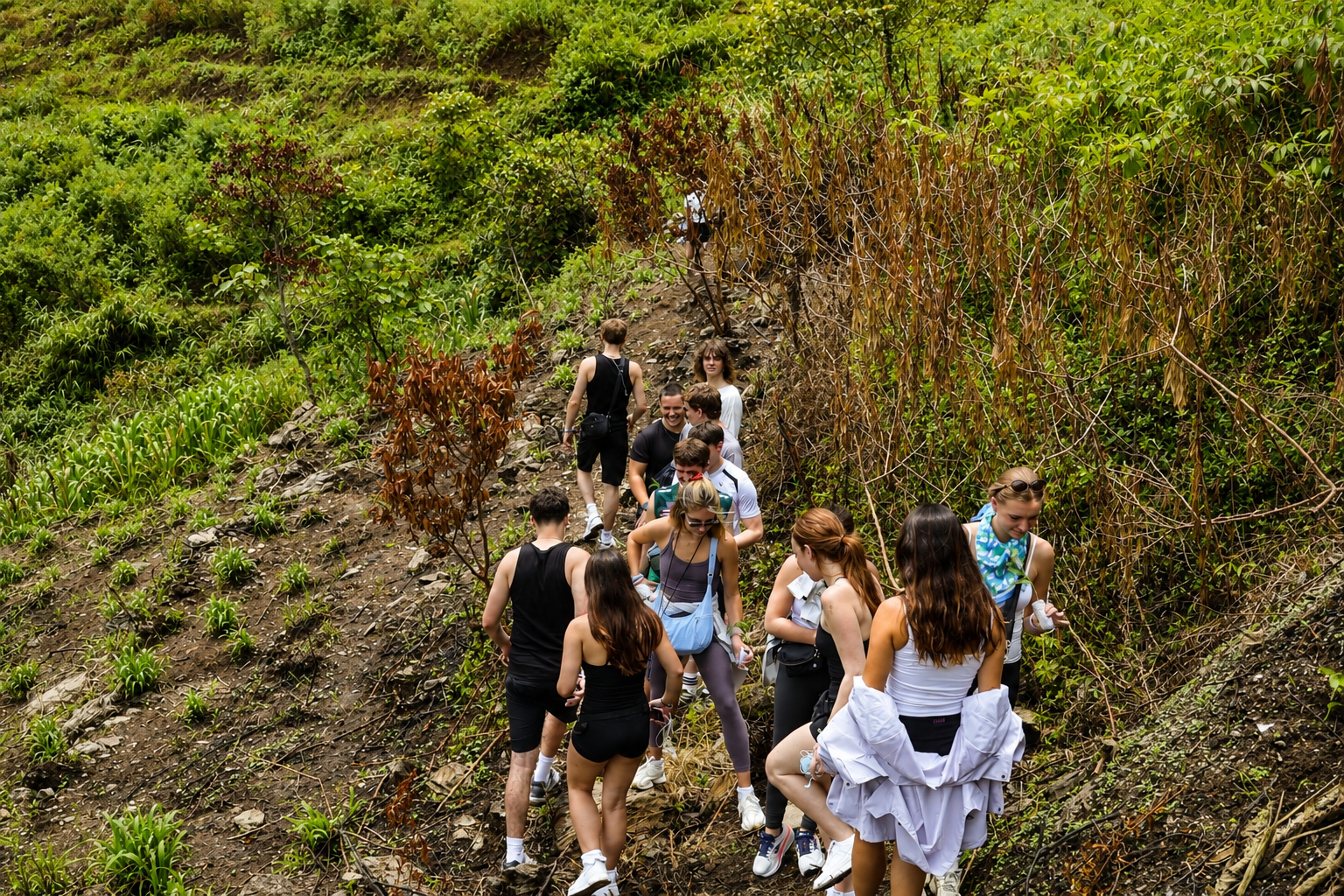
Du Gia Waterfall is more than a swimming spot on the Ha Giang Loop. It is a peaceful pause in the middle of a powerful mountain journey. After dramatic passes, winding roads, and long riding days, this hidden corner gives travelers a chance to slow down, cool off, and feel the softer side of Ha Giang.
With Jasmine Tours, the experience becomes part of a larger story. You can ride with an Easy Rider, travel by Jeep, or self-ride if you have the right experience and documents. However you choose to explore, the most important thing is to travel with care: care for your own safety, care for local communities, and care for the nature that makes this place unforgettable.
Through Plant Today – Green Tomorrow, travelers can also leave something meaningful behind. Long after the swim is over and the Loop has ended, a young tree may still be growing somewhere in Ha Giang soil. It may stand quietly beneath the same sky, near the same mountains, holding a small memory of your journey.
That is the kind of travel worth remembering.
There is 0 comment, review about Du Gia Waterfall : A Peaceful Escape on the Ha Giang Loop
TVQuản trị viênQuản trị viên
Xin chào quý khách. Quý khách hãy để lại bình luận, chúng tôi sẽ phản hồi sớm