
Shopping cart,
0 products
There are no products in your shopping cart.
Nội dung bài viết
Harmon Fisher kneels on a thin strip of soil between jagged limestone outcrops, cupping earth around a young fir sapling and pressing it firm. The ground here is dry, gravelly and pale; you have to clear away stones just to find room for the roots. The American, visiting the Dong Van Karst Plateau, works slowly — as if leaving behind something tangible for the land he has just crossed.
Around him is the familiar scenery of the karst country: grey mountains stacked in layers, highland wind, hardship written every narrow terrace of soil — only species that tolerate cold and drought can take root. The fir Fisher has just planted is one of thousands that travelers have set this ground with their own hands. According to Nhan Dan newspaper (June 12, 2026), the program launched in April 2026, making tree planting part of every visitor's itinerary.
For Fisher, it was no side activity. "This was the most memorable experience of my trip. I didn't just get to explore beautiful scenery — I had the chance to leave a concrete mark on the land I visited. The tree I've just planted will be a reason to come back here in the future," he said. Instead of taking away a photograph, the visitor leaves behind a tree — something that, if it survives, will still be here long after the convoy departs, rooted in rock, growing through the highland seasons.
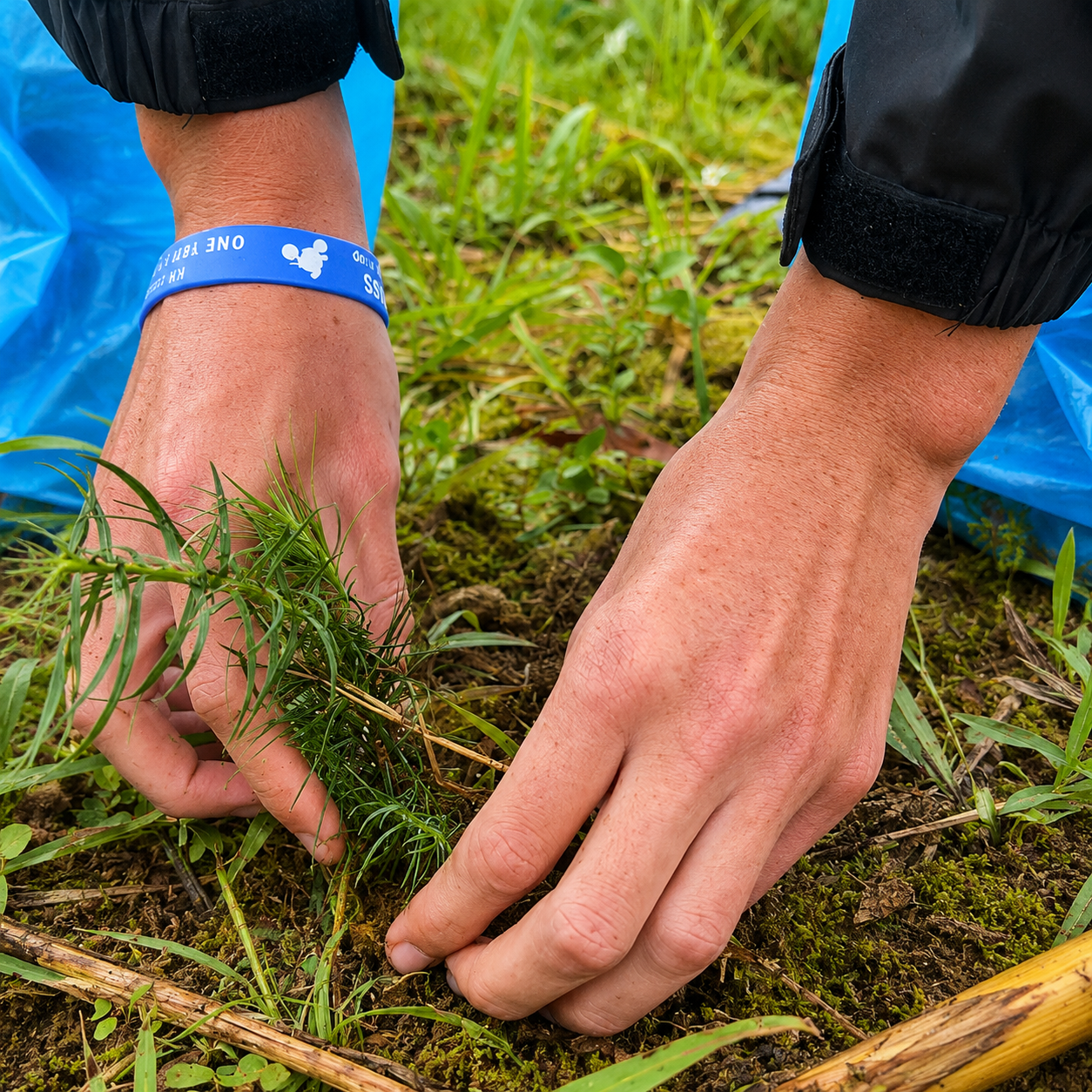
The mechanics behind that moment are simple. Every traveler heading up to the highlands is handed a sapling to plant themselves. The harder part begins after the group leaves: the company works with local residents to tend, monitor and manage those trees across many seasons. One visitor, one tree — and the tree stays.
The program is called "Plant Today – Green Tomorrow," a name that captures its logic: the act takes a few minutes on a single morning, while the result is measured in years.
The idea was not there the start. Nguyen Van Tuan, the company's director, recalls the turning point: "Initially, aiming to create long-term livelihoods for poor households, the company decided to run a program supplying seedlings for local people to plant production forests and fruit trees. But during implementation, we decided to work with residents to organize for tourists to plant the trees directly." A small shift in thinking — enough to turn a plain support program part of the Dong Van Karst Plateau travel experience.
The species are chosen for substance, not show: Chinese fir (sa moc), acacia, manglietia and temperate fruit trees — all able to withstand the karst region's harsh climate. Tying each visitor to one specific tree keeps the model drifting empty campaigning: a tree gets planted, someone tends it, and a local family benefits as it grows.

The project began with a far more modest calculation. At first, Jasmine intended only to supply seedlings to poor households on the plateau, so families could plant production forests and fruit orchards. The target then fit a single word: livelihood — living capital rooted in the ground of a rocky land where little grows easily. The idea of bringing tourists the picture only emerged once the program was already moving — an approach that, in Tuan's telling, kept the original goal intact while giving each journey a lasting mark.
That order matters, because it was never reversed. Local people remain the destination: trees go the ground to stay with the households, becoming the forest and the orchard that will feed them in years to come; travelers are simply the extended arm that multiplies the work faster. Here, responsible tourism appears not as a slogan but as simple arithmetic: every passing guest adds one more tree, the number grows with each convoy heading up the plateau, and the trip leaves behind something alive — something that earns for the people who stay.
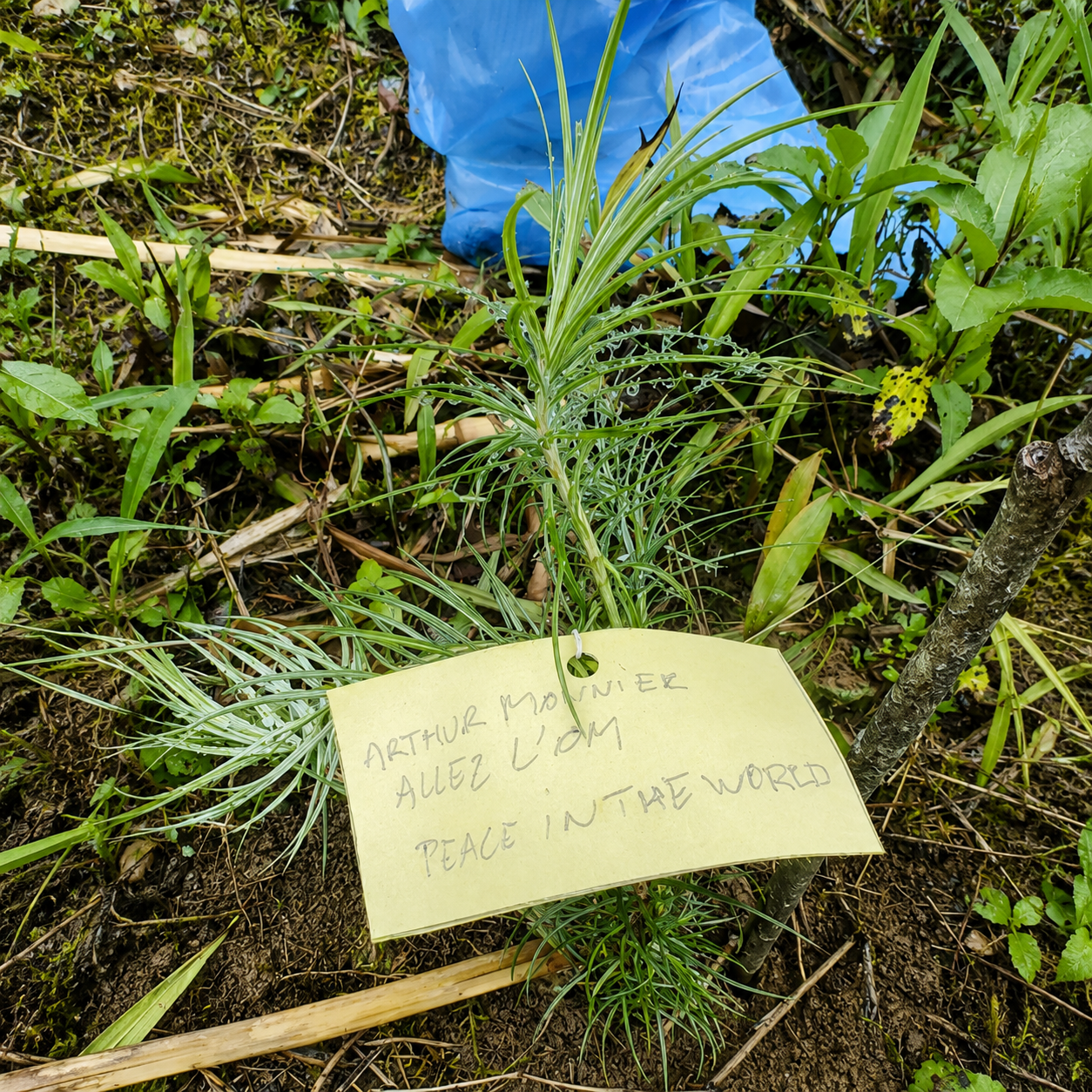
A tree bearing a family's name is different a tree planted for a photograph, and the difference is time. A Chinese fir needs many years to become timber; temperate fruit trees take several seasons before their first harvest. Tourists take their pictures and drive out of Dong Van the same day, but the tree remains — and the real question begins right there: who waters it, who nurses it through the dry season, who replaces the ones that die.
This is where responsible tourism parts ways with greenwashing. In plenty of places, nature is merely a backdrop: people arrive, collect a few beautiful frames and leave, and the landscape is not one leaf richer. The trees on the karst plateau are positioned differently — planted by visitors, inherited by the families living beside the land. The heavy work falls in the stretch after the guests have gone: in its filings to local authorities, the company commits to monitoring, tending and reporting on the trees — taking on the burden of proving they are still alive. For a region where livelihoods remain hard-won, a seedling becoming an asset behind, rather than a prop for photos, is what gives sustainable tourism here its meaning.
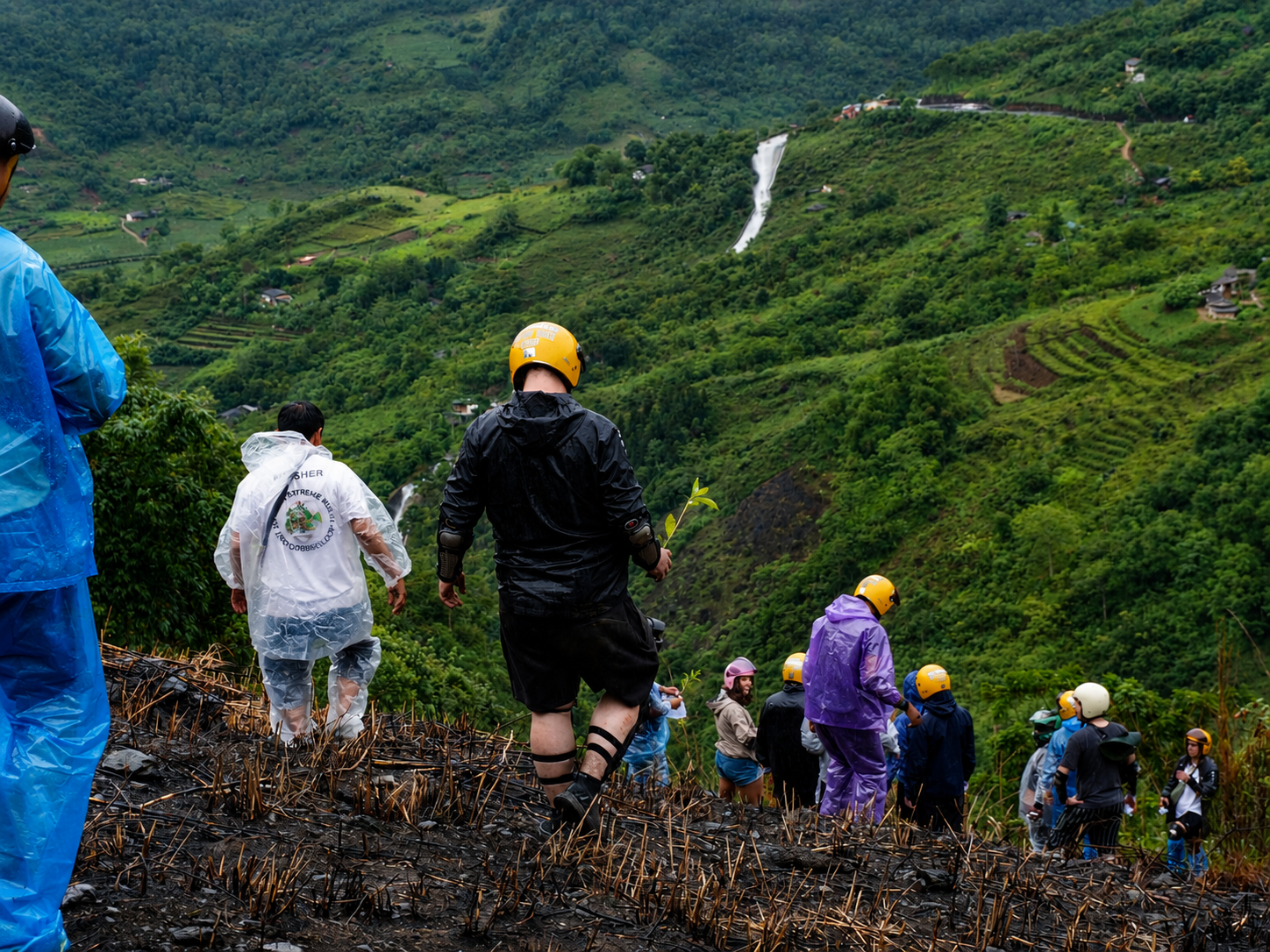
A tree planted on someone else's land — land administered by the state — cannot rest on goodwill alone. Before the first tourist picked up a spade, the company filed a formal request with the People's Committee of Minh Tan commune and the commune's police, seeking approval to operate in the area.
The site covered by that filing is a plot of farmland of roughly 3,000 square meters belonging to Mr. Vuong Duc Tai in Ban Pho hamlet, Minh Tan commune. Planting began only after he agreed and the authorities raised no objection — not after someone found a hillside that photographed well.
In its petition, the company set out several commitments: to comply with land, forestry and environmental law; never to proceed without the consent of the landowner and local government; to monitor and care for the planted trees and report on the results; and to coordinate closely with the authorities throughout.
Those written commitments say more than any self-introduction could: responsibility to a locality is measured by the number of offices you must knock on before a tree goes the ground, not by the number of photos taken afterward. Mr. Tai's plot is a single site within a much larger program intended to spread across the Dong Van Karst Plateau — and every new site means another dossier, another landowner, another commune. Permits plot by plot, agreements household by household, a pledge to tend trees for years after the guests have gone: slow, unglamorous work that sits beneath every picture of a traveler pressing soil around a fir sapling.
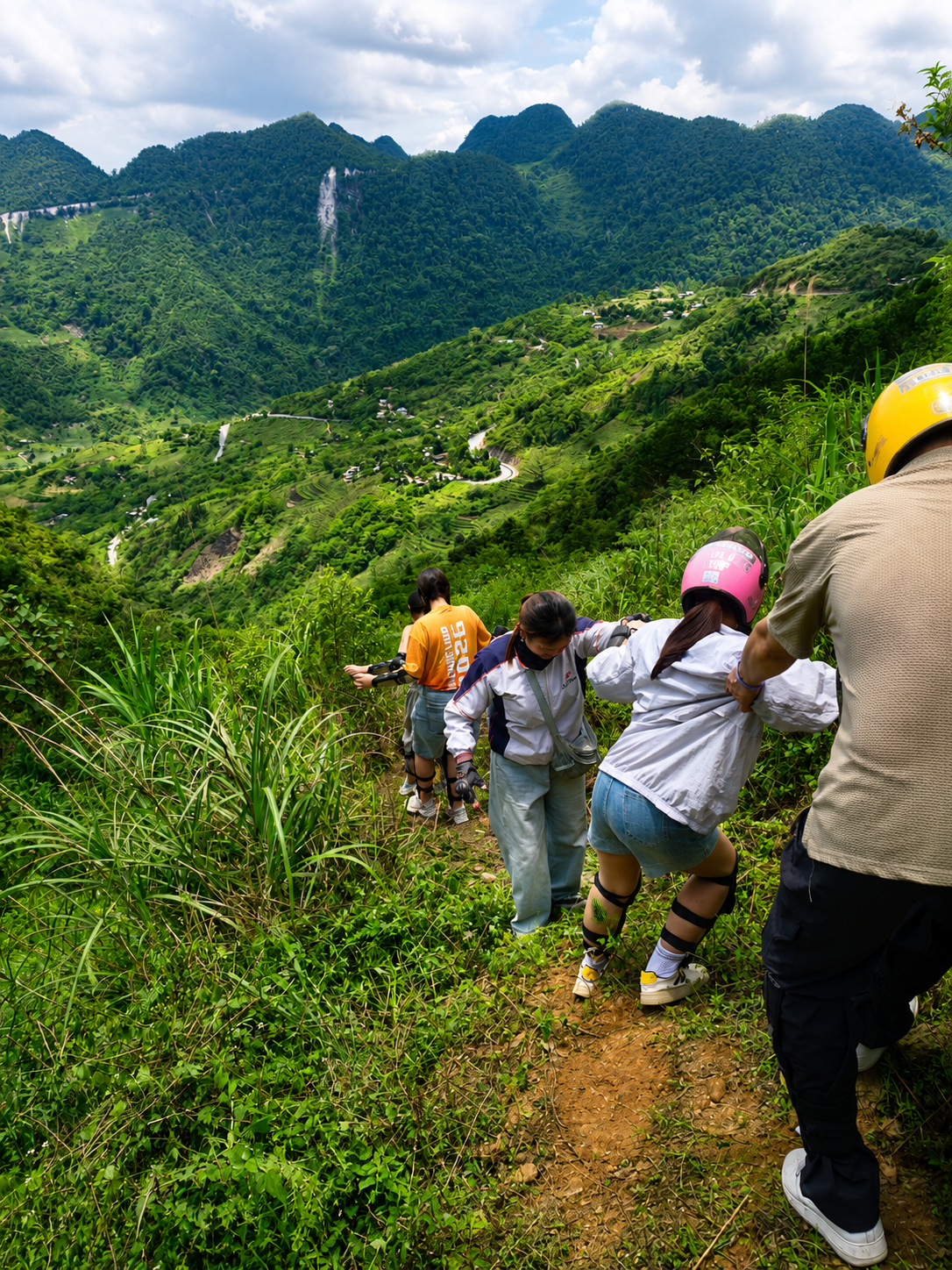
According to Nhan Dan newspaper (June 12, 2026), about 5,000 travelers had passed through this karst country and planted a sapling with their own hands by the time of the report. One tree per person, so the count of trees planted is likewise around 5,000. Four months; five thousand trees taking hold in one of northern Vietnam's harshest landscapes.
Set against the company's operating capacity, the figure describes a road map rather than a campaign. Each year the company brings an average of about 15,000 travelers up to the plateau. Holding to the one-visitor-one-tree principle, that is roughly 15,000 trees a year; to reach one million, simple arithmetic yields a horizon measured in decades. A goal like that cannot be folded a single tourist season or a single media push — it obliges whoever pursues it to stay.
Director Nguyen Van Tuan frames the destination in exactly that time scale:
"On average, the company organizes tours for about 15,000 travelers a year. With the orientation of every visitor planting one tree, we will maintain this project over many consecutive years, working toward the larger goal of planting one million trees for the people of the Dong Van Karst Plateau."
The way the number is presented — anchored to real capacity, to the phrase "many consecutive years," to beneficiaries who are local residents rather than a corporate scoreboard — makes it sound like a long-haul commitment rather than a slogan. The first five thousand trees are only the visible tip; the rest lies in tourist seasons yet to come, and in whether each newly planted tree survives the severity of the highlands.
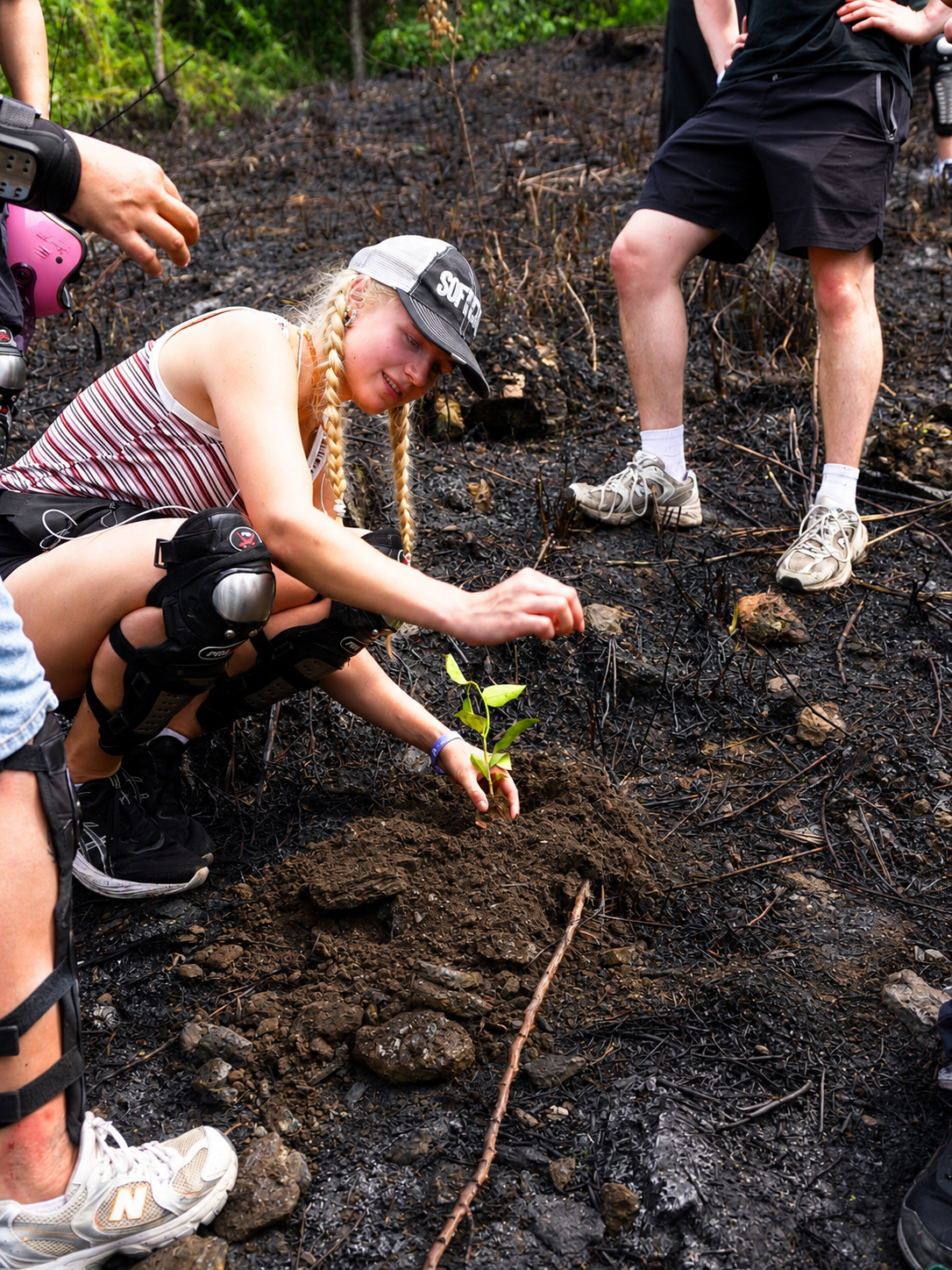
On a freshly turned bed of soil in Minh Tan commune, it is hard to tell guest host. A foreigner holds a sapling upright; a visitor Hanoi banks earth around its base. A local farmer tamps the edge of the hole with his heel, while the Easy Rider (a motorbike tour guide-driver) who has just delivered his passengers rolls up his sleeves to dig the next row.
Participants come every direction: domestic and international travelers, most of them backpackers; the company's Easy Rider team and staff; local households volunteering their land and labor. Once planted, the tree does not belong to the guest; it stays with the residents, tended by their hands.
Hoang Quyet Tien, a traveler Hanoi, described his family's planting day: "My family was delighted with our trip to the Dong Van Karst Plateau, a wild and majestic land — and above all, planting a tree with our own hands on this harsh terrain made the journey all the more meaningful."
Behind such mornings stands Jasmine Ha Giang Co., Ltd. The business began modestly, renting motorbikes to long-haul travelers, and grew a tour ecosystem serving mainly international backpackers, its Easy Riders carrying guests across treacherous mountain passes.
No one here calls this charity. On the karst, a tree-planting morning becomes a place where three groups of strangers share the same patch of ground — something the organizers describe with a plain phrase: community-based tourism.
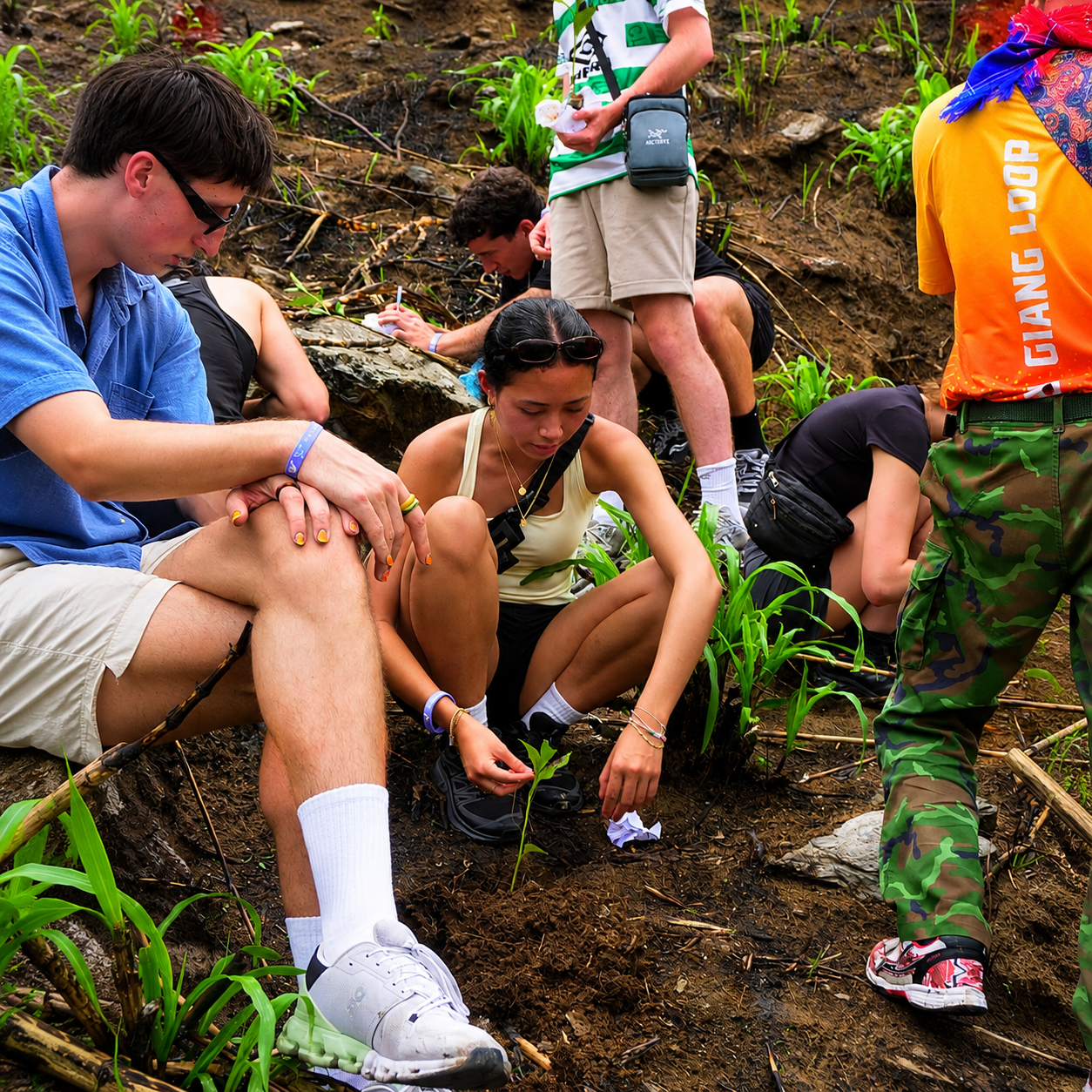
On the Dong Van Karst Plateau, soil is scarce and rock is plentiful. A fir clinging to a crevice is the work of many seasons, not of one afternoon. But the trees already in the ground at Minh Tan, and on the terraced plots along the tour routes, are growing the way things grow in the highlands: slowly, surely, with someone watching over them. Each trunk carries two names — a traveler who set it the earth, and a local household that stays to water it, weed around it, and see it through each dry season. The visitor leaves; the tree remains.
If the goal of one million trees takes shape over the years ahead, what is behind will be more than shade or income for poor households — it will be a new layer of green spreading across the grey rock, contributed by people far away and kept alive by the people of this place. For a highland known above all for being wild and majestic, tourism on the Dong Van Karst Plateau done this way leaves one more reason for the land to grow greener than it is today.
This article is based on field material and information published by Nhan Dan newspaper on June 12, 2026.

What is the 'one visitor, one tree' model?
Every traveler heading up to the highlands receives a sapling and plants it personally. Afterward, the company works with local residents to tend, monitor and manage the planted trees across many seasons. The project is called "Plant Today – Green Tomorrow."
Who runs the tree-planting project on the Dong Van Karst Plateau?
The project is run by Jasmine Ha Giang Co., Ltd. (trading as "Jasmine Tour Ha Giang"), whose director is Nguyen Van Tuan. The company operates the program in coordination with local residents and authorities, and does not plant on any land without the owner's consent.
How many trees have been planted?
The program launched in April 2026. According to Nhan Dan newspaper (June 12, 2026), about 5,000 travelers had taken part by the time of the report, corresponding to roughly 5,000 trees planted. The company's long-term goal is one million trees, sustained over many consecutive years.
What species are planted, and where?
The chosen species are Chinese fir (sa moc), temperate fruit trees, acacia and manglietia — all suited to the karst region's harsh climate. One specific site is a plot of farmland of roughly 3,000 square meters belonging to Mr. Vuong Duc Tai in Ban Pho hamlet, Minh Tan commune, part of a program intended to spread across the plateau.
Which province is the Dong Van Karst Plateau in now?
The Dong Van Karst Plateau is now part of Tuyen Quang province, following the merger of the former Ha Giang province Tuyen Quang. Familiar destinations in the area — Dong Van, Meo Vac, Yen Minh and Minh Tan commune — all lie within Tuyen Quang.
There is 0 comment, review about Dong Van Karst Plateau tourism: every visitor leaves a tree behind
TVQuản trị viênQuản trị viên
Xin chào quý khách. Quý khách hãy để lại bình luận, chúng tôi sẽ phản hồi sớm