
Shopping cart,
0 products
There are no products in your shopping cart.
Nội dung bài viết
There are places where nature whispers in silence, where the earth seems to breathe beneath your feet, and where your heart, without warning, surrenders to the beauty before your eyes. One such place is Angel Eye Mountain Cao Bang, or Núi Mắt Thần in Vietnamese — a natural masterpiece cradled in the untouched highlands of northern Vietnam.
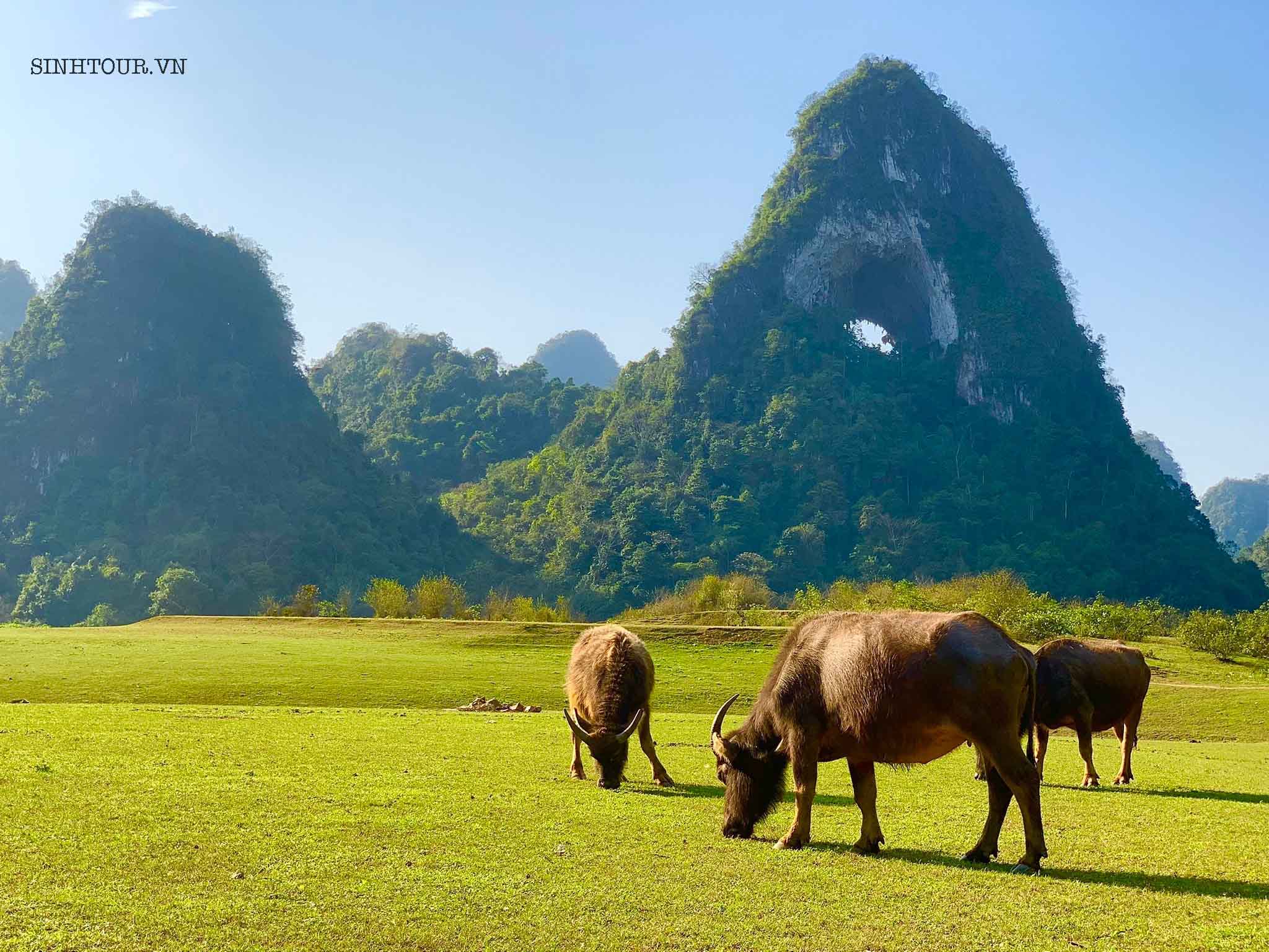
afar, the mountain resembles a colossal guardian standing amid the mist, its enormous circular hole piercing through limestone as though heaven itself a mark upon the earth. It is more than a destination — it is a poetic symbol of eternity, of nature’s eye watching over the land.
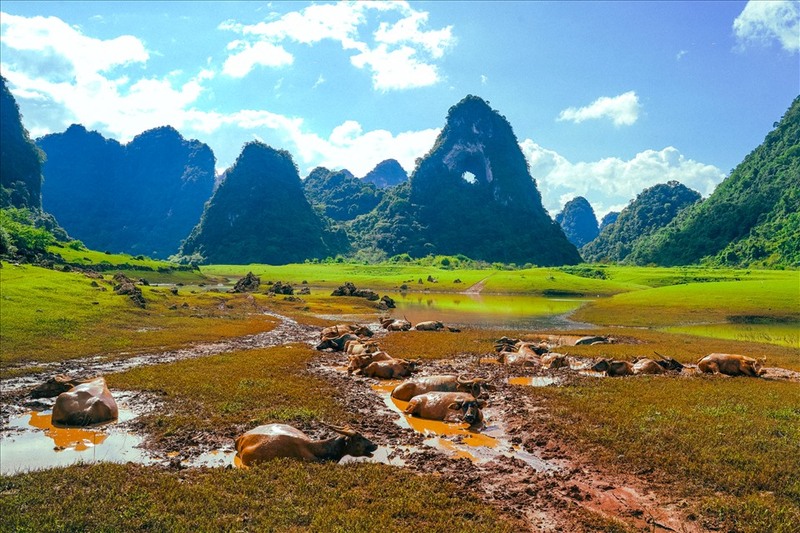
In local legends, this mountain was once the dwelling of celestial beings. The round hole — almost perfectly circular — was said to be the “eye of a god”, who looked down upon the valleys of Cao Bang to protect the land and its people. Over time, wind, rain, and the gentle persistence of nature sculpted the mountain what it is today — a harmony of stone and sky.
Standing beneath this natural window, one can almost feel the breath of ancient times. When the sun rises, light pours through the opening, illuminating the valley below with a golden halo — as if a divine spotlight has chosen this very place to reveal heaven’s beauty to mankind.
The mountain lies in Quang Trong Commune, Tra Linh District, about 50 kilometers Cao Bang City. It stands nearly 1,000 meters above sea level, surrounded by emerald fields, mist-covered peaks, and the tranquil Thang Hen Lake — a vast mirror reflecting the dance of clouds and mountains.
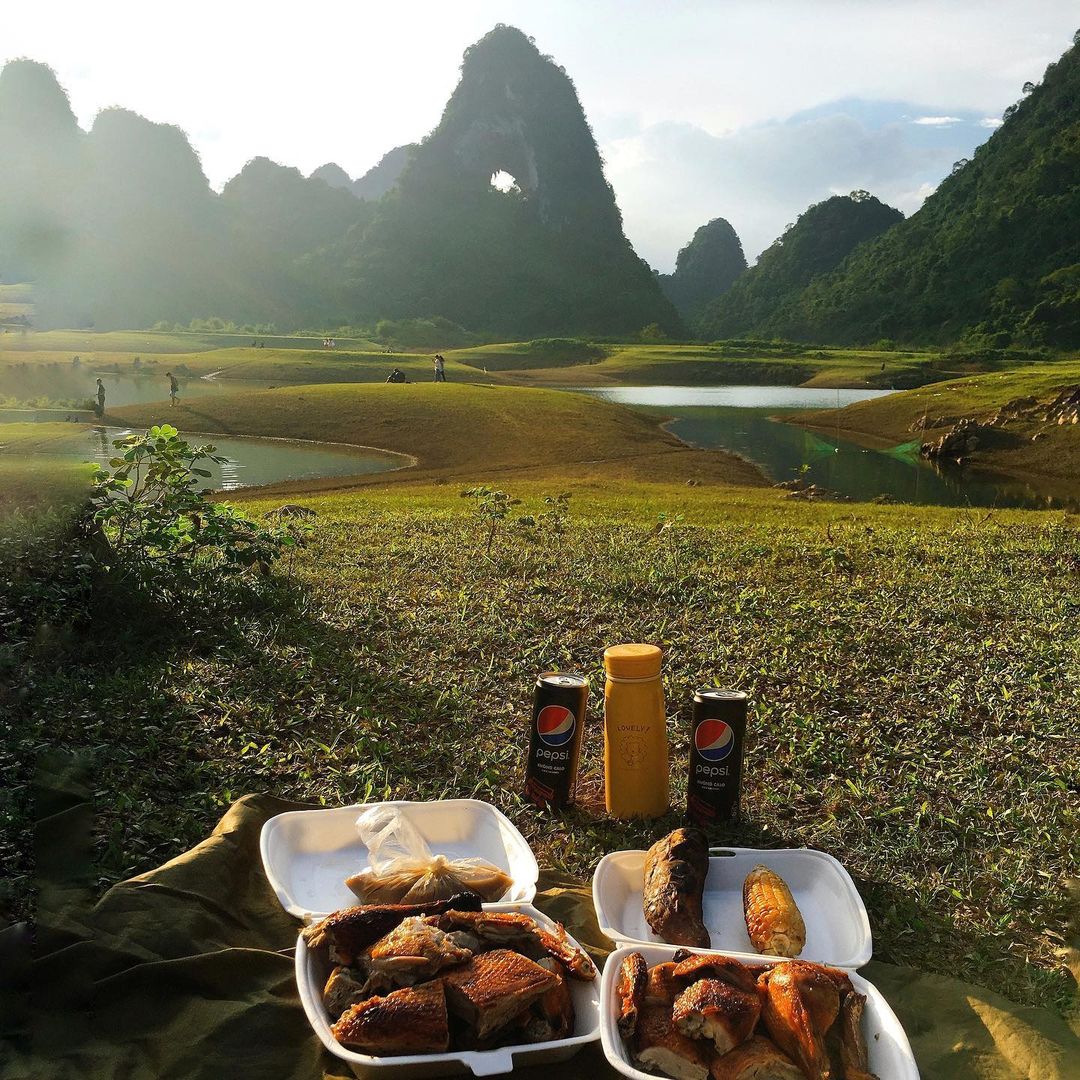
The road to Angel Eye Mountain Cao Bang is more than a journey; it’s an adventure that unfolds like a living poem.
Travelers begin their trip Cao Bang City, following a winding route through Tra Linh. The air grows cooler, the roads narrower, and the scenery more dramatic with each kilometer. Terraced rice fields stretch like golden stairways to the sky, while wooden stilt houses of Tay and Nung ethnic groups nestle peacefully at the base of forested hills.
As your motorbike hums through the twists and turns, the scent of wildflowers fills the air, and the rhythm of the road lulls you a meditative calm. Locals wave with warm smiles; children run alongside, their laughter echoing across the valleys.
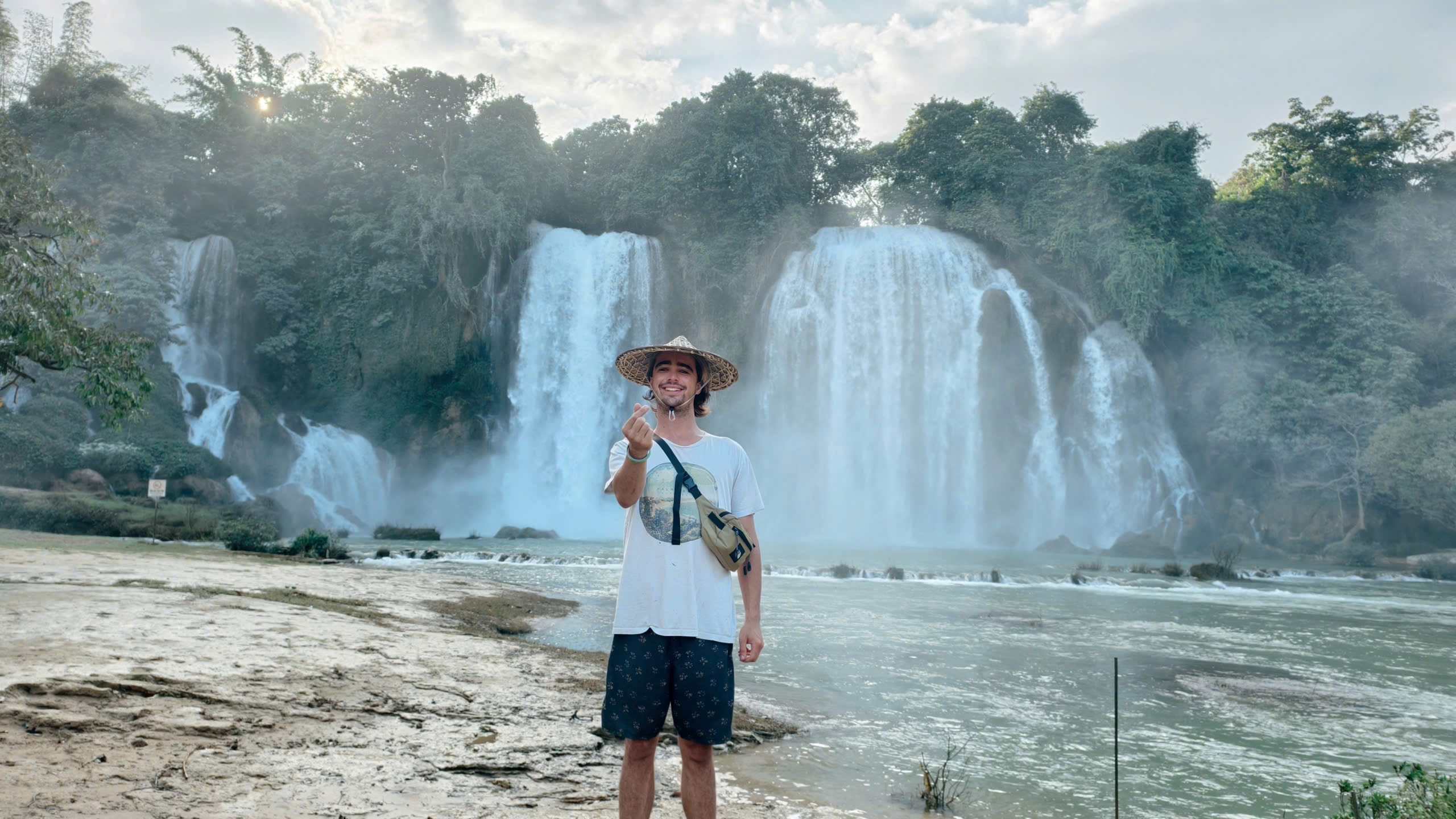
This ride is part of the Ha Giang – Cao Bang 3-Day Loop, a route loved by adventurers around the world. Riders journey through Bac Me, Bao Lac, Pac Bo, Nguom Ngao Cave, Ban Gioc Waterfall, and finally reach this hidden marvel — Angel Eye Mountain — the crown jewel of Cao Bang’s wilderness .
To travel here is to trace the pulse of northern Vietnam — each curve, each mountain pass, each gust of wind telling a story of endurance, beauty, and belonging.
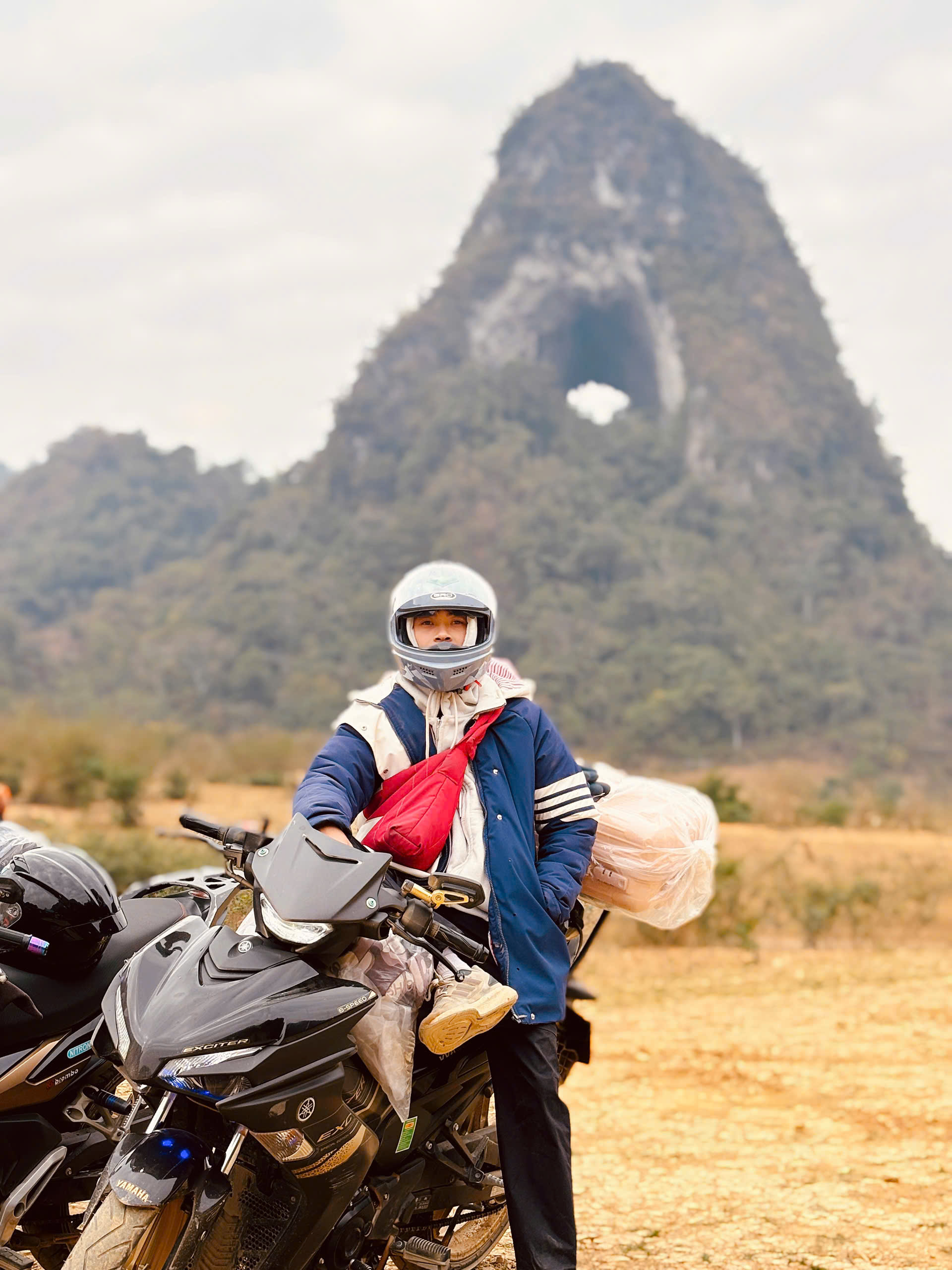
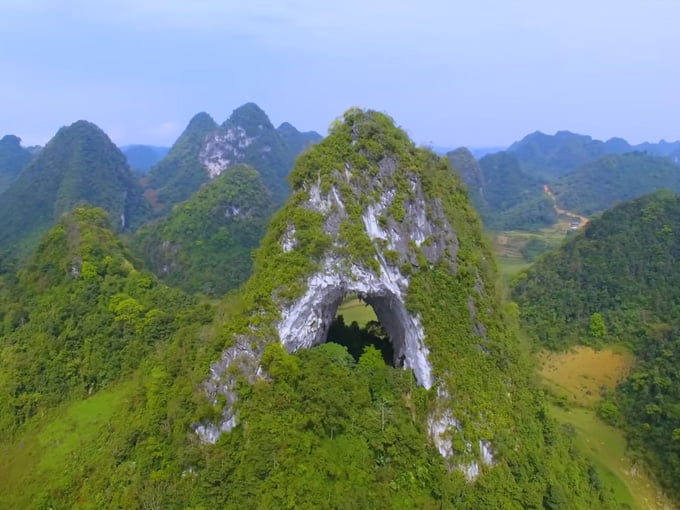
What makes Angel Eye Mountain Cao Bang so extraordinary is its enormous circular hole — about 50 meters wide — carved naturally through limestone cliffs over millions of years. a distance, the hole appears as a perfect ring of light; up close, it feels as if you’re standing before the window of the universe itself.
When the sun filters through the “eye,” light cascades across the valley, bathing everything below in a soft glow. The scene transforms constantly — in the morning, mist curls around the cliffs; by noon, sunlight turns the rocks sheets of gold; and by dusk, the eye of heaven seems to close gently as the day fades twilight.
Beneath the mountain lies Thang Hen Lake, a pristine body of water surrounded by forested karst peaks. The lake’s still surface mirrors the clouds and cliffs so perfectly that you can hardly tell where the sky ends and the water begins. Many visitors choose to camp here — waking up to birdsong, mist, and the scent of damp earth, far the rush of city life.
The hike to the “eye” takes about one hour, a moderate trek suitable for most travelers. The path leads you through tall grasses, limestone outcrops, and the symphony of cicadas. As you climb higher, the valley below gradually reveals its depth — vast, green, and silent.
And then, suddenly, you see it: the Eye of Heaven, carved the mountain like a secret passage between two worlds.
Standing beneath that circle of light, you feel weightless — the boundary between you and the sky blurs. The wind rushes past, carrying the scent of soil and pine, whispering stories of old gods and mountain spirits.
If you’re lucky enough to reach the summit at sunset, you’ll witness one of the most breathtaking sights in Vietnam. The sun slips behind the limestone ridges, its final rays streaming through the hole, painting the valley in gold and crimson. It’s a moment that feels sacred — as if nature itself pauses to watch the light die beautifully.
Cao Bang’s weather shifts gently throughout the year, but the best time to visit Angel Eye Mountain is September to November. During these months, the air is crisp, the skies are crystal clear, and the golden hues of autumn spread across the valleys.
Spring (March–May) is another great season — flowers bloom along the trails, and the lake glows with shades of jade. Summer brings lush greenery and warm sunlight, perfect for camping by the water, though short afternoon showers are common.
Each season, however, paints the landscape in a new mood — soft, wild, and endlessly photogenic.
For those exploring the region, here’s a recommended itinerary that includes Angel Eye Mountain:
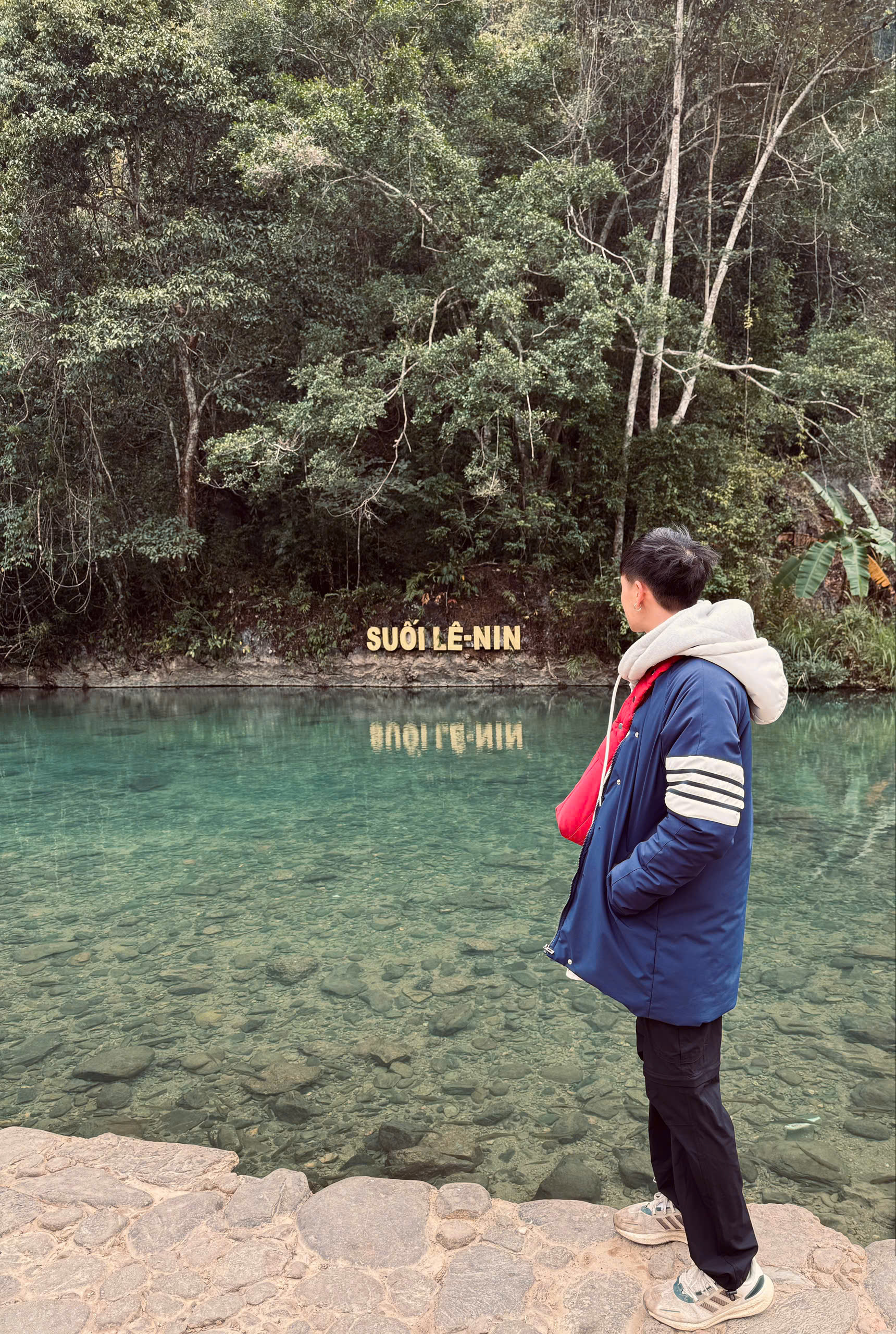
Day 1: Depart Cao Bang City → Visit Pac Bo Historical Site and Lenin Stream (where Ho Chi Minh began Vietnam’s revolution). Overnight near Pac Bo.
Day 2: Explore Nguom Ngao Cave, marvel at Ban Gioc Waterfall, then journey to Angel Eye Mountain for sunset. Camp overnight near Thang Hen Lake.
Day 3: Visit Phuc Sen Blacksmith Village, pass through Ma Phuc Pass, and return to Cao Bang City by afternoon.
This itinerary captures everything — revolutionary history to breathtaking nature — showcasing the best of northern Vietnam in just three unforgettable days.
While Angel Eye Mountain remains a relatively untouched gem, its growing popularity calls for responsible tourism. Visitors are encouraged to:
Avoid littering and minimize plastic use.
Respect local customs and the livelihoods of ethnic communities.
Support local homestays and eco-tours to ensure your visit benefits the area.
Remember, the mountain is not just a backdrop for photos — it is a living, breathing ecosystem. Leave only footprints, take only memories, and let your journey contribute to its preservation.
There are several local homestays and eco-lodges around the Thang Hen Lake area. Most are run by Tay or Nung families who offer warm hospitality and traditional meals cooked over wood fire. Popular options include:
Thang Hen Lake Homestay: Ideal for early morning lake views and local cuisine.
Quang Uyen Eco Stay: Located between Ban Gioc and Thang Hen, convenient for multi-day itineraries.
Pac Bo Homestay: A cultural experience for those visiting Lenin Stream and Pac Bo Cave before heading to Angel Eye Mountain.
These accommodations provide not just comfort but also authentic connections with the people of Cao Bang — the true soul of the region.
The ethereal beauty of Angel Eye Mountain Cao Bang has made it a rising star among photographers, filmmakers, and travel influencers. The mountain’s massive circular hole creates a perfect natural frame for sunrise and sunset shots. Drone footage captures the surreal geometry of the landscape — the circle of the mountain mirrored by the round surface of Thang Hen Lake below.
In recent years, several Vietnamese travel shows and international vloggers have featured the site, calling it “Vietnam’s Eye of Heaven”. Yet despite the attention, it remains blissfully quiet — a rare privilege in today’s world of crowded tourist spots.
For many who visit, Angel Eye Mountain becomes more than a photo spot — it becomes a personal revelation. The mountain, with its silent majesty, reminds us that time is infinite, and that beauty can emerge the slow patience of nature’s hand.
Standing beneath the mountain’s “eye,” you may feel as though it sees your soul — stripping away noise and ego, leaving only stillness and awe. It is a reminder that the world, even in its wildest corners, still holds spaces that make us humble.
Angel Eye Mountain Cao Bang is not just a point on the map — it’s a journey the heart of nature’s artistry. It is where sky and stone meet, where light writes poetry on rock, and where every traveler finds a reflection of their own wonder.
If you ever find yourself longing for peace, for adventure, or for meaning beyond the city lights, follow the winding road north. The Eye of Heaven is waiting — open, eternal, and silently calling your name.
Join Jasmine Tour on a breathtaking journey to Angel Eye Mountain Cao Bang — where the “Eye of Heaven” opens to reveal the soul of northern Vietnam.
There is 0 comment, review about Angel Eye Mountain Cao Bang – The Hidden Eye of Heaven in Northern Vietnam
TVQuản trị viênQuản trị viên
Xin chào quý khách. Quý khách hãy để lại bình luận, chúng tôi sẽ phản hồi sớm